
Metrics chronicle acts and performances. Analytics provide an interpretation of a metric’s nature, extent and proficiency. There are too many metrics and analyses in most sports. Its as though the contest, game or event is played on an Excel spreadsheet. What happened to a team or athlete’s personality? There is excessive analytics in sports.
The games and contests are living and played by human beings with countless variables.
Intangible qualities are not captured in sports analytics. How about clutch, grit, likability, unlikability, coasting, mailing-it-in, chemistry, comradery, fit, cohesion? There is no way to quantify these traits in an athlete or team.
One strategy of roster building involves throwing money at it. The approach acts like a rotisserie or fantasy team, which is head-to-head competition in analytical categories. Examples abound of highly paid, awful professional rosters. The 2026 New York Mets are the latest example of a highly paid and awful professional baseball team.
The NBA’s 2026 World Champion New York (NY) Knickerbockers (Knicks) exemplify analytics gone awry. The team does not lead the league in any offensive or defensive statistical categories. There is no superstar. No out-of-sight contracts. Players respect the game and each other. There is a general civility toward referees and opponents. Trashing talking is not their signature.
The first thing NY Knick MVP Jalen Brunson did when the final horn sounded was go shake the hand of opposing San Antonio head coach, Mitch Johnson. How welcoming. How classy. What a fantastic example of sportsmanship.
The Muse is a long time NY Knick fan. The 1973 championship was won out in Los Angeles very late on a school night. There was no video replay. Couldn’t watch it live. WABC New York sportscaster, Sal Marchiano provided highlights and analysis the next evening. Warner Wolf was still in Washington D.C. honing his popular quip, “let’s go to the videotape!”
53-years later another NBA championship comes to New York. The decades of losing seasons were painful. These 2026 Knicks like each other. Three of them played together on Villanova winning two national championships. Earning the moniker the ‘Nova Knicks.
No analytic tracks the status of liking one’s teammates, especially those with which two national championships are shared. Or, the likelihood of success in the pros by playing and staying together. Former Villanova Coach, Jay Wright taught them all well. Individually and statistically, other NBA players are better at their positions. Collectively, the former collegian champions outperformed their analytical analysis.
On the flip side of the metrics equation are the NY Mets with a $368 million payroll, the second highest in Major League Baseball (MLB). Nearing the end of June they are last in the National League (NL) East with only 34-wins. The Muse couldn’t easily decipher Savant’s Statcast. Presumably its a metrics software program for MLB. The NY Mets have red markings and minus signs for many Statcast categories. Watching them nightly, the designations are unsurprising. Thirty six (36) actions are tracked for hitting, pitching, fielding, and running. Too many. It represents excessive analytics in sports.
Watching sports and teams, Women’s College Softball, by far has the most fun. Teams cheer, chant, and sing from the dugout. Games are played in intimate settings, outdoors, with the sun shining. What’s not to like? Players self express. They sport tattoos, jewelry, NIL sponsorship gear, makeup, and sunglasses. No long faces. Players smile during the game. Coaches appear normal and generally even folks.
The Muse’s favorite team as a participant was college softball senior year. It held many of the above qualities. The coach/manager was a former basketball teammate, who needed players. Recruited and put on first base, the Muse batted third and lead the team in batting average that season. This is after six-years off from last playing competitively. It was beautiful, fun, full of smiles, and pure joy. Just find a glove and show up. The Muse was all in. Is there an analytic for wanting to be wanted?
WNBA player Megan Gustafson of the expansion team Portland Fire, summed it up, “We are a bunch of overlooked players and I think we all have a chip on our shoulder. I’ve never really been respected as a basketball player until I’ve gotten here. So, I’m really thankful for this team, this organization. They really believe in me.”
What about fear? How is that quantified? Fearlessness, heart, brains, grit are traits that don’t fit into an analytical model. The Muse had high school and college teammates, who were fearless no matter the circumstance. Its catchy and rubs off on others. Fearless players in the NBA include Jalen Brunson, NY Knicks and Victor Wembanyama, San Antonio Spurs.
And there is the obscure. Another teammate frequently ate dry raisin bran. She said it was to help her gut. Is there an analytic for bodily function?
How about difficult teammates. Is there an analytic for “I don’t like you.” The Muse has been on teams where someone is unlikable by consensus. Usually its a personality flaw, rather than a performance flaw. Though the former could affect the latter. It becomes a huge problem when the unlikable one is the best player with the athletic gifts. Is there an analytic for unlikability?
Is there a metric for drafting players, who want to be coached? Those who play the right way. Play together. Seem to like each other. How are these qualities quantified?
Analytics and data points are pervasive in athletics and sports performance. There are excessive analytics in sports. A poster on Reddit quipped “analytics are made by super nerds, who have no physical connection with the sport/game. So instead, they attempt to force a mental one.”
Analytics don’t explain the why. There is a skill and art to it.

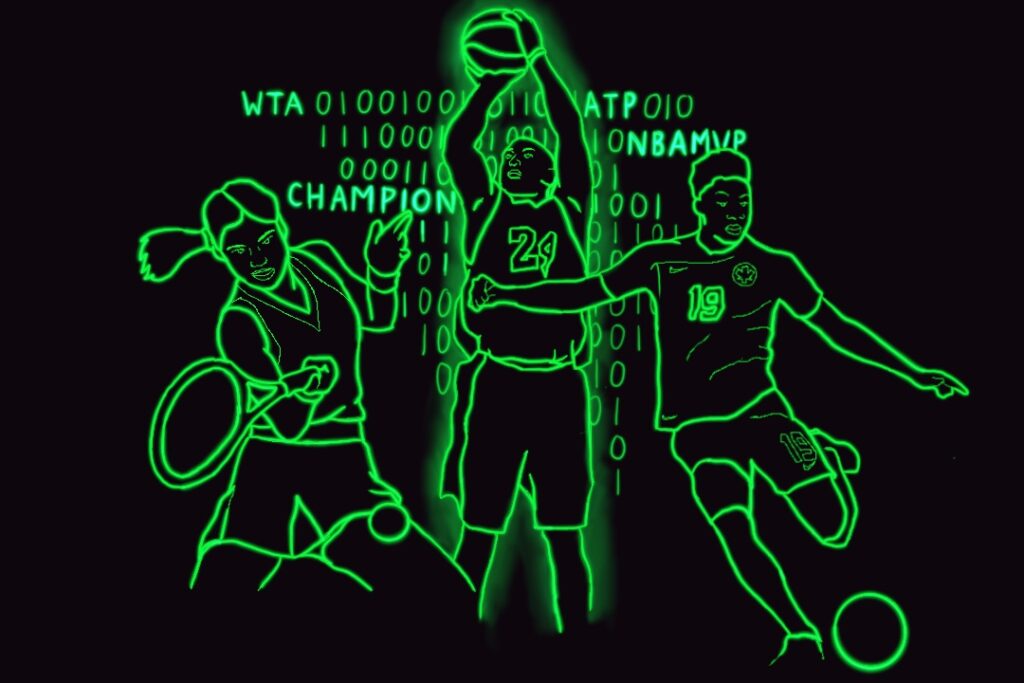
The Sphinx Sports by Grace Xu
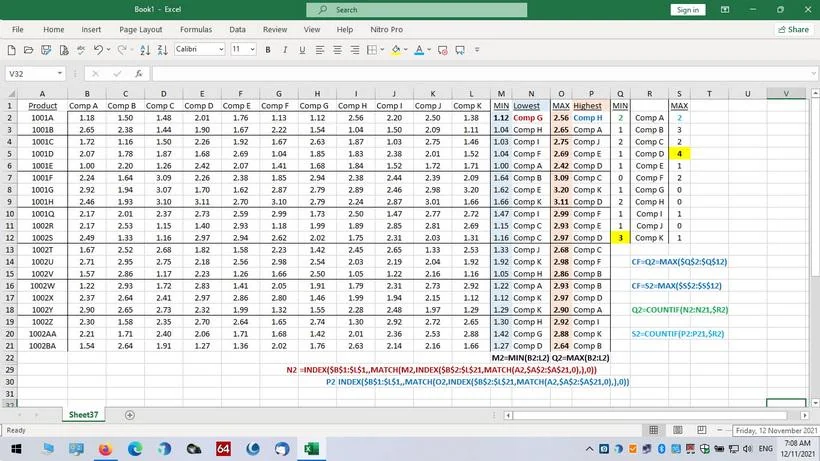
Random Excel spreadsheet